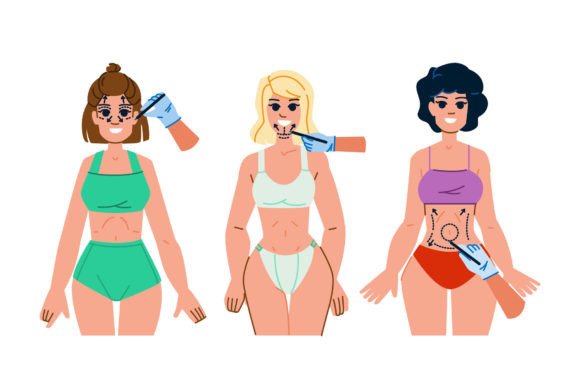
Understanding Face Belly Surgery Vector: A Guide for Designers and Families
In the evolving landscape of digital illustration, specific character archetypes serve as powerful tools for storytelling, education, and emotional connection. One such concept that has gained traction in design circles is the Face Belly Surgery Vector. While the term might initially sound clinical or confusing, it refers to a specific style of flat cartoon illustration featuring characters with distinct facial and body proportions, often used to depict themes of transformation, health, family dynamics, and growth. These vector graphics are essential resources for creators aiming to communicate complex ideas about physical changes, parenting, and learning environments in an accessible, non-threatening way.
For adults seeking practical solutions in graphic design, marketing, or educational material creation, understanding how to utilize these assets is crucial. Whether you are designing a brochure for a pediatric clinic, creating an e-book on family nutrition, or developing school learning materials, the right visual representation can bridge the gap between technical information and audience engagement. This article explores what makes these vectors unique, the challenges they address, and how different users can leverage them effectively.
Defining the Visual Language of Transformation
The Face Belly Surgery Vector is not merely a collection of shapes; it is a semantic tool designed to represent change. In the context of flat cartoon illustration, "surgery" in this title often metaphorically represents the alteration of form to achieve a healthier or more idealized state, or literally depicts medical scenarios in a simplified manner suitable for children. The "face" and "belly" components highlight areas of significant human development and concern. When combined with keywords like "mother kid," "parent daughter," and "child home," these vectors create a narrative ecosystem.
These illustrations typically feature clean lines, solid colors, and scalable geometry, available in formats like JPG for web use and EPS for high-resolution print. The aesthetic is deliberately approachable, avoiding the harsh realism of medical photography while retaining enough detail to be recognizable. This balance allows designers to tackle sensitive topics—such as weight management, post-operative recovery, or developmental milestones—without causing anxiety. The result is a visual language that supports family education and school learning by making abstract concepts concrete and relatable.
Addressing Challenges in Family and Educational Communication
One of the primary challenges facing parents, educators, and healthcare providers is explaining physical changes or medical procedures to young audiences. Traditional imagery can be intimidating, leading to resistance or fear. The Face Belly Surgery Vector addresses this by softening the visual impact. For instance, when discussing the importance of a healthy diet or the process of growing up, a flat cartoon illustration of a child and parent interacting in a home setting can convey warmth and safety.
Consider the scenario of a "parent daughter" relationship focused on health education. A designer might struggle to find stock images that show a mother guiding her daughter through a lifestyle change without appearing judgmental or overly clinical. By utilizing a custom vector set where the characters have expressive faces and proportionate bodies, the message shifts from correction to support. Similarly, in "school learning" environments, teachers need materials that explain biology or health without triggering discomfort. These vectors provide a neutral ground where students can engage with the subject matter objectively.
Furthermore, there is a challenge in maintaining consistency across various media. A logo or character used in a digital app needs to look just as good on a printed flyer. The versatility of the vector format ensures that whether the content is displayed on a smartphone screen during a "child home" activity or projected in a classroom, the quality remains sharp and the message clear.
Practical Applications and Real-World Outcomes
The utility of the Face Belly Surgery Vector extends beyond simple decoration. It serves as a functional component in several key areas:
- Healthcare Marketing: Clinics specializing in pediatrics or cosmetic procedures for families can use these illustrations to demystify treatments. A series of images showing a "mother kid" duo before and after a procedure can illustrate the journey of care in a reassuring way.
- Educational Resources: Teachers can integrate these characters into lesson plans about anatomy, hygiene, and nutrition. The "family education" aspect is strengthened when visuals reflect diverse family structures and realistic home environments.
- Digital Storytelling: App developers creating games or interactive stories about health can use these vectors to build engaging avatars. The scalability of EPS files ensures that characters remain crisp on any device resolution.
- Social Media Campaigns: Organizations promoting healthy living can use JPG versions of these illustrations to create shareable infographics. The flat design style aligns perfectly with modern social media aesthetics, encouraging higher engagement rates.
The outcome of using these tailored visuals is often a measurable increase in comprehension and retention. When people see a character they recognize—a friendly face, a relatable belly shape—they are more likely to absorb the accompanying text. This is particularly true for children, who rely heavily on visual cues to understand their world.
Tailoring Approaches for Different Users
While the core asset remains the same, different users will approach the Face Belly Surgery Vector based on their specific goals. A graphic designer might focus on the technical aspects, ensuring the color palette matches a brand's identity and that the file formats (JPG, EPS) are optimized for their workflow. They might spend time adjusting the curvature of the "belly" or the expression of the "face" to better suit a specific narrative arc.
Conversely, a parent or educator might view these vectors as communication tools rather than artistic creations. Their focus would be on the story the image tells. For example, a parent creating a home-based learning module might select an illustration that shows a "parent daughter" pair cooking together, emphasizing the "child home" dynamic. They would prioritize the emotional resonance of the image over the technical precision of the lines.
Healthcare professionals, on the other hand, require accuracy within the stylization. They need the "surgery" aspect to be represented correctly enough to be informative but safely enough to be comforting. They might request variations of the vector that show specific stages of recovery or different types of interventions, ensuring that the "family education" provided is medically sound yet visually gentle.
Recommendations for Implementation
To maximize the effectiveness of these illustrations, consider the following recommendations:
- Maintain Consistency: If you use a specific character style for your "mother kid" or "parent daughter" themes, ensure that the art style remains consistent across all platforms. Mixing hyper-realistic photos with flat cartoons can confuse the audience.
- Focus on Context: Always place the character in a relevant setting. A "child home" scene should include familiar objects like toys or kitchen items to ground the viewer. For "school learning," include books or desks to establish the environment.
- Choose the Right Format: Use EPS files for any print materials to ensure high-quality reproduction. Reserve JPG files for digital distribution where file size and loading speed are priorities.
- Test with Your Audience: Before finalizing a campaign, show the illustrations to a small group representing your target demographic. Ensure that the "Face Belly Surgery Vector" conveys the intended message without unintended negative connotations.
Ultimately, the power of the Face Belly Surgery Vector lies in its ability to simplify the complex. By transforming potentially daunting topics into friendly, flat cartoon illustrations, we empower families, educators, and patients to engage with health and growth proactively. Whether you are a designer crafting the next great educational tool or a parent looking for ways to explain life changes to your child, these visual assets offer a pathway to clearer, more compassionate communication. Embracing this style allows us to focus on the human element—the relationships between mothers and kids, parents and daughters, and the shared journey of learning and healing.