The Evolution of Scientific Symbolism: Why the DNA Line Icon Defines Modern Visual Communication
In the rapidly evolving landscape of digital design, the intersection of scientific accuracy and aesthetic minimalism has created a unique niche for vector graphics. Among these, the DNA Line Icon has emerged as a pivotal element for professionals across diverse sectors. From educational platforms to biotech startups, this specific visual asset represents more than just a double helix; it symbolizes clarity, innovation, and the seamless integration of complex biological concepts into user-friendly interfaces. As we navigate an era where information density is high but attention spans are short, the ability to convey intricate ideas through simple, editable stroke linear icons has never been more critical.
Defining the DNA Line Icon in the Digital Ecosystem
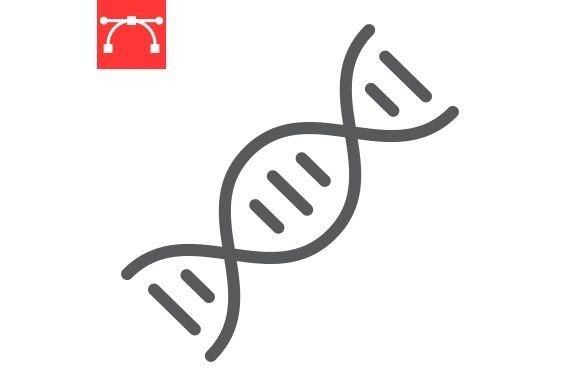
To understand the significance of this graphic, one must first look at its technical construction. The DNA line icon is not merely a static image; it is a sophisticated piece of biology sign vector graphics designed with precision. Unlike raster images that lose quality when scaled, vector formats such as EPS 10 ensure that the iconic double helix remains crisp on everything from a mobile notification badge to a massive billboard advertisement.
This specific style relies on the "linear" or "outline" aesthetic. By stripping away solid fills and heavy shading, designers focus on the essential geometry of the molecule. This approach aligns perfectly with contemporary UI/UX trends that favor lightness and transparency. The result is a versatile asset that can be easily recolored, resized, and integrated into various brand identities without compromising visual integrity. For creators and freelancers, having access to an editable stroke linear icon means they can adapt a single file to fit multiple project requirements, saving time and ensuring consistency across their portfolio.
The Intersection of Biology and Business Aesthetics
The rise of the biotechnology sector has fundamentally shifted how science is marketed. In the past, scientific imagery was often dense, photographic, and intimidating to the average consumer. Today, the market demands approachability. The DNA Line Icon serves as a bridge between rigorous scientific data and accessible business communication. It allows biotech firms, pharmaceutical companies, and health-tech startups to project an image of cutting-edge research while maintaining a clean, modern brand identity.
Consider the branding of a new gene therapy startup. Using a photorealistic rendering of a DNA strand might suggest complexity and risk. However, utilizing a stylized, minimalist DNA line icon suggests precision, control, and forward-thinking innovation. This shift reflects a broader industry trend where technology companies strive to demystify their operations. By adopting vector graphics that simplify complex structures, businesses can communicate trust and clarity to investors, partners, and end-users alike.
Transforming Education and Learning Workflows
Beyond the corporate sphere, the impact of high-quality vector assets is profoundly felt in the realm of school and education. Educators and instructional designers are constantly seeking ways to make abstract biological concepts tangible for students. Traditional textbooks often rely on static, low-resolution diagrams that fail to engage digital-native learners. The introduction of scalable, editable biology signs has revolutionized this workflow.
When educators utilize a DNA Line Icon, they gain the flexibility to annotate, color-code, and animate the structure within their learning management systems (LMS) or presentation software. An editable stroke linear icon allows a teacher to highlight specific base pairs or mutation points directly on the diagram without needing advanced graphic design skills. This adaptability supports active learning strategies where students interact with the material rather than passively consuming it.
- Visual Consistency: Schools can maintain a unified visual language across all biology modules, from genetics to molecular biology, by using a consistent set of linear icons.
- Accessibility: High-contrast line art is often easier for visually impaired students to interpret when combined with screen readers, compared to complex shaded illustrations.
- Scalability: Whether displayed on a smartboard in a classroom or a tablet in a remote learning setting, EPS 10 files ensure the image remains sharp and legible.
This shift indicates a changing preference in educational materials: a move away from static content toward dynamic, interactive, and visually adaptable resources. The DNA line icon is at the forefront of this transformation, serving as a foundational building block for modern STEM curricula.
Workflow Efficiency for Creators and Entrepreneurs
For freelancers, marketers, and entrepreneurs, time is the most valuable currency. The demand for rapid prototyping and agile design workflows has made the availability of pre-made, high-quality vector assets indispensable. The DNA Line Icon fits seamlessly into this ecosystem. Instead of spending hours drafting a custom illustration from scratch, a designer can integrate a professional-grade biology sign vector graphic into a pitch deck, website, or marketing campaign instantly.
The "editable stroke" feature is particularly crucial here. It empowers creators to tweak the thickness of the lines to match their brand guidelines or adjust the curvature to better fit a specific layout. This level of customization ensures that the final product feels bespoke, even when starting with a template. In the competitive world of digital marketing, where visual differentiation is key, the ability to quickly iterate on designs gives entrepreneurs a significant advantage.
Furthermore, as the concept of "creator economy" expands, the need for diverse, niche-specific assets grows. While generic icons have saturated the market, specialized symbols like the DNA line icon offer a way for creators to signal expertise and authority in specific fields. Whether it's a blog post about CRISPR technology or a podcast cover for a health-focused show, using precise scientific iconography establishes credibility immediately.
Future Trends: The Role of Vector Graphics in Tech and Lifestyle
Looking ahead, the relevance of the DNA Line Icon extends beyond current applications. As personalized medicine and genetic testing become more mainstream lifestyle choices, the visual language surrounding genetics will continue to evolve. We are seeing a trend where consumers expect brands to speak their language—literally and figuratively. The clean, recognizable silhouette of the DNA helix has become a universal shorthand for personalization, health optimization, and future potential.
In the realm of technology, the integration of these icons into augmented reality (AR) and virtual reality (VR) environments is on the horizon. Linear icons are ideal for holographic displays and heads-up interfaces because they remain legible against varying backgrounds and lighting conditions. An editable stroke linear icon can be dynamically adjusted in real-time based on user interaction, offering a responsive experience that static images cannot provide.
Moreover, the sustainability of digital design is becoming a talking point. Vector graphics, being code-based rather than pixel-heavy, require less bandwidth to load and store. This efficiency aligns with the growing emphasis on green computing and optimized web performance. By choosing lightweight EPS 10 formats over heavy raster images, businesses contribute to a more efficient digital infrastructure.
Connecting to Broader Market Developments
The widespread adoption of the DNA Line Icon is symptomatic of larger shifts in how we consume and create information. We are moving toward a world where complexity is managed through simplicity. In a market flooded with data, the ability to distill a concept like genetic sequencing into a single, elegant line drawing is a powerful communicative tool. It reflects a consumer preference for clarity and a business strategy focused on immediate recognition.
As artificial intelligence begins to generate more of our visual content, the value of human-curated, semantically accurate vector libraries will only increase. AI can generate thousands of variations, but the nuance of a scientifically accurate yet aesthetically pleasing biology sign vector graphic requires human oversight and intent. Professionals who understand the context and application of these assets will be best positioned to lead in the creative industries of tomorrow.
Ultimately, the DNA Line Icon is more than just a graphic element; it is a testament to the power of design to translate the invisible complexities of life into visible, understandable forms. Whether used in a high-stakes boardroom presentation, a classroom lesson plan, or a consumer app interface, its utility lies in its ability to connect us to the fundamental building blocks of our existence, rendered with the precision and elegance of modern technology. As we continue to innovate, these simple lines will undoubtedly play a central role in how we visualize the future of science, education, and commerce.