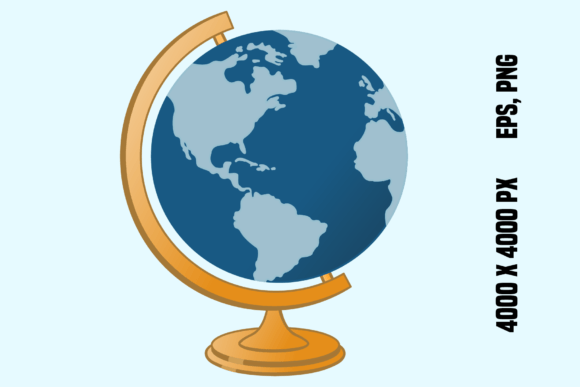
Integrating School Globe Planet Earth into Professional and Educational Workflows
In the modern digital landscape, visual assets are not merely decorative elements; they are functional components of communication strategy. Whether you are an educator designing a curriculum, a marketer crafting a global campaign, or a small business owner building a brand identity, the quality and versatility of your graphics matter. The School Globe Planet Earth asset represents a specific type of high-resolution vector resource designed to bridge the gap between aesthetic appeal and practical utility. Understanding how to effectively integrate this asset into your broader workflow can significantly enhance the professionalism and clarity of your projects.
This article explores the practical applications of the School Globe Planet Earth design element, focusing on its technical specifications, compatibility with various software ecosystems, and strategic placement within educational and commercial processes. By treating this asset as a tool rather than just an image, creators can streamline their production timelines and maintain consistent visual standards across multiple platforms.
Understanding the Technical Foundation
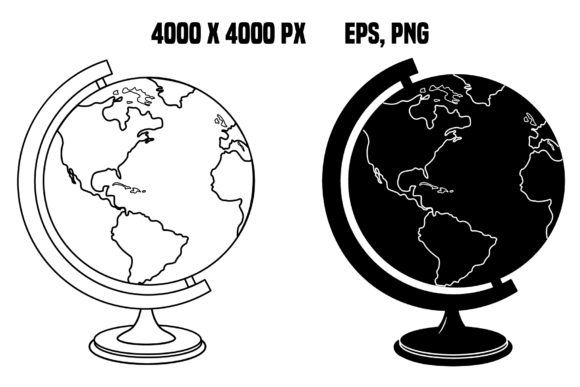
Before incorporating any graphic into a project, it is essential to understand its technical architecture. The School Globe Planet Earth file is provided as a ZIP archive containing both EPS and PNG formats. This dual-format approach is critical for maintaining flexibility in diverse working environments. The EPS (Encapsulated PostScript) file is a vector-based format, meaning it uses mathematical equations to define shapes rather than pixels. This allows for infinite scalability without loss of quality, making it ideal for large-format printing such as banners, posters, or textbook covers.
Conversely, the included PNG file offers a transparent background at a high resolution of 4000 x 4000 pixels. This raster format is optimized for digital use, including web design, social media graphics, and presentation slides. The transparency feature is particularly valuable because it eliminates the need for time-consuming background removal tasks. For professionals who manage tight deadlines, having a ready-to-use, transparent asset reduces friction in the design process and ensures immediate compatibility with layered compositions.
Strategic Implementation in Educational Contexts
For educators and instructional designers, visual aids play a pivotal role in cognitive retention and engagement. The School Globe Planet Earth icon serves as a universal symbol for geography, environmental science, and global studies. When integrating this asset into lesson plans, consider its role in establishing thematic consistency. For instance, if you are developing a module on climate change, using a standardized globe icon across all handouts, slide decks, and online quizzes creates a cohesive learning experience.
Implementation begins with preparation. Before inserting the image into your document or presentation software, ensure that your color palette aligns with the educational tone you wish to convey. While the vector file allows for color customization, the default design often provides a neutral yet professional baseline. Educators can use the high-resolution PNG to create interactive digital worksheets where students label continents or analyze data points overlaid on the globe. The clarity of the 4000 x 4000 pixel resolution ensures that even when zoomed in during virtual classes, the details remain sharp and legible.
Enhancing Brand Identity for Businesses and Entrepreneurs
Small business owners and entrepreneurs frequently require visual elements that communicate scope, reliability, and connectivity. A globe icon is a powerful semiotic tool that suggests international reach or comprehensive service coverage. When used in branding materials, the School Globe Planet Earth asset should be treated as part of a larger visual identity system. It interacts with other brand assets such as logos, typography, and color schemes to reinforce the company’s message.
Consider the workflow of launching a new service with a global component. During the planning phase, marketers might use the vector EPS file to create mockups for packaging or promotional merchandise. Because vectors are editable, the globe can be subtly adjusted to match specific brand colors without compromising integrity. In the execution phase, the PNG version can be deployed rapidly across digital channels, from email newsletters to website headers. This seamless transition between print and digital mediums ensures that the brand message remains consistent regardless of the touchpoint.
Furthermore, consistency in visual assets builds trust. When clients see the same high-quality globe icon on a business card, a proposal document, and a LinkedIn post, it reinforces the perception of a well-organized and professional entity. This attention to detail is a hallmark of effective brand management and can differentiate a startup from established competitors.
Workflow Integration and Efficiency Tips
To maximize the value of the School Globe Planet Earth asset, it is crucial to organize your digital resources effectively. Upon downloading the ZIP file, extract the contents into a dedicated folder within your asset library. Label the files clearly, noting the resolution and format differences. This organizational step may seem minor, but it saves significant time during future projects when quick access to reliable assets is necessary.
- Preparation: Verify software compatibility. Ensure your design tools support EPS imports for vector editing and handle high-resolution PNGs without compression artifacts.
- Customization: Use the vector file to adjust line weights or colors to match specific project requirements before exporting to final formats.
- Quality Control: Always preview the asset at actual size in its intended medium. Check for clarity on mobile screens and sharpness in print proofs.
- Archiving: Keep the original ZIP file backed up. This preserves the source material for future updates or re-edits.
Efficiency also comes from understanding when to use which format. Reserve the EPS file for projects requiring scaling beyond standard screen dimensions or for professional printing. Use the PNG for web-based applications where loading speed and transparency are priorities. By matching the file type to the specific use case, you optimize both performance and visual quality.
Compatibility with Modern Design Tools
The versatility of the School Globe Planet Earth design lies in its compatibility with industry-standard software. Graphic designers using Adobe Illustrator or CorelDRAW will find the EPS file fully editable, allowing for precise manipulation of anchor points and paths. For those utilizing more accessible tools like Canva, PowerPoint, or Google Slides, the high-resolution PNG is the preferred format. Its transparent background ensures that it layers cleanly over photos, gradients, or solid colors without unsightly white boxes.
When working in collaborative environments, sharing the correct file type is essential. If handing off designs to a printer, provide the EPS or a high-quality PDF derived from it. For digital teams, share the PNG to ensure fast rendering and easy integration into content management systems. Understanding these interoperability nuances prevents bottlenecks in the production pipeline and facilitates smoother collaboration among team members.
Long-Term Value and Sustainability
Investing in high-quality, versatile assets like the School Globe Planet Earth contributes to long-term operational efficiency. Unlike low-resolution images found through generic searches, this professionally crafted element withstands the test of time and technological changes. As display resolutions increase and printing technologies advance, having a 4000 x 4000 pixel source file ensures that your materials remain relevant and crisp.
Moreover, using licensed, high-quality assets mitigates legal risks associated with copyright infringement. For publishers and content creators, this peace of mind is invaluable. It allows you to focus on creative execution and strategic planning rather than worrying about compliance issues. The initial effort of integrating a robust asset into your workflow pays dividends in reduced revision cycles and enhanced professional credibility.
In conclusion, the School Globe Planet Earth is more than a simple graphic; it is a functional tool that supports clear communication and professional presentation. By understanding its technical properties, organizing it within your digital library, and applying it strategically across educational and business contexts, you can elevate the quality of your output. Whether you are teaching complex geographical concepts or branding a global enterprise, this asset provides the reliability and flexibility needed to succeed in a visually driven world.